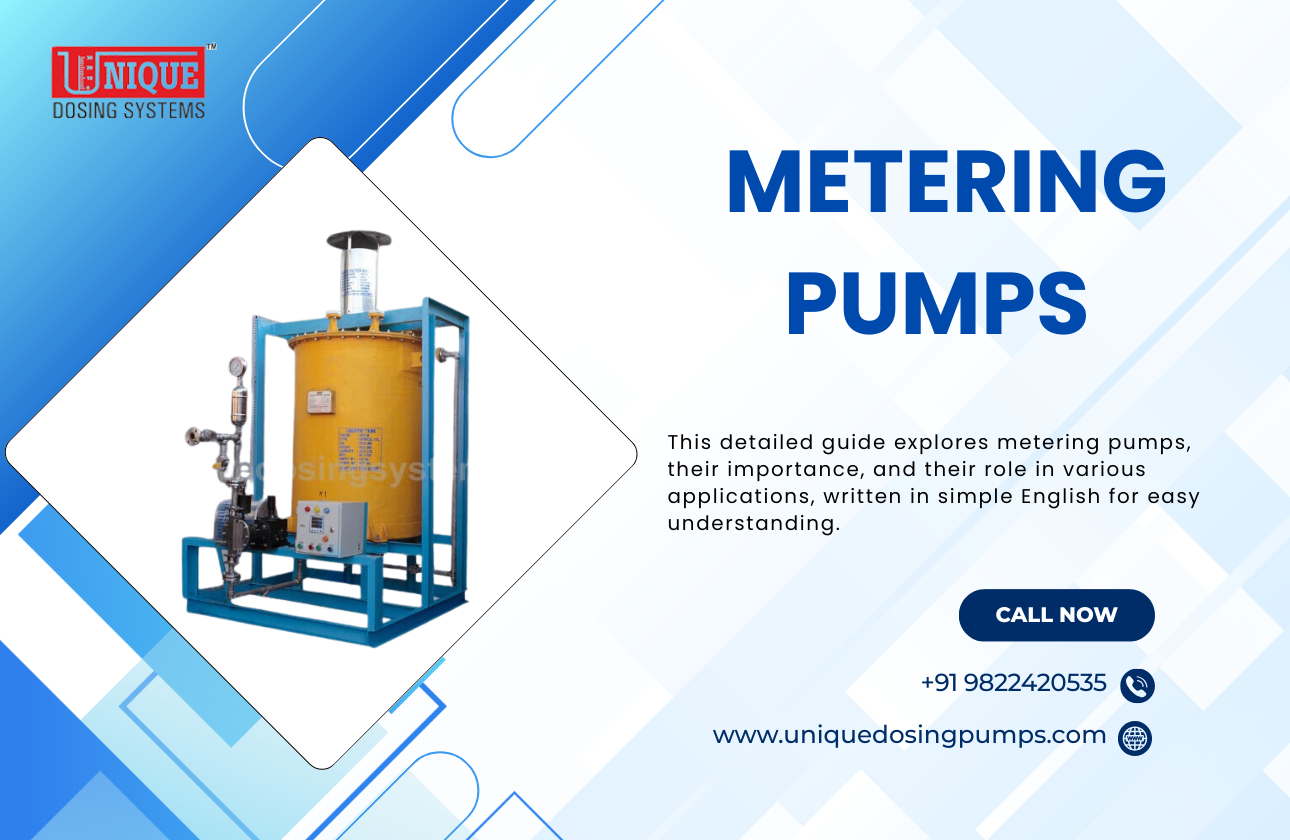
Introduction to Metering Pumps
Metering pumps are crucial equipment in industries that require precise fluid handling and distribution. They are specifically designed to deliver exact amounts of liquids, making them invaluable in processes that demand accuracy. Whether it's in chemical manufacturing or water treatment, these pumps are designed to ensure that the correct dose of chemicals is applied consistently and reliably.
How Do Metering Pumps Work?
Metering pumps operate by moving liquids using a specific mechanism that ensures the same volume is displaced with each stroke. This process allows for precise control over the flow rate, which can be easily adjusted. Most metering pumps use a piston or diaphragm that moves back and forth, driven by a motor, to push the liquid through a valve system
Applications of Metering Pumps
The versatility of metering pumps makes them ideal for a wide range of applications. They are commonly used in industries such as water treatment, where they add disinfectants to ensure water safety. They also play a critical role in food processing, where precise dosages of ingredients are necessary. Additionally, they are an integral component in pharmaceutical production, ensuring the accuracy of liquid medicines and treatments.
Types of Metering Pumps
Metering pumps come in various types, each designed for specific applications. Diaphragm pumps are popular due to their ability to handle corrosive and viscous chemicals without leakage. Piston pumps offer high pressure and are suitable for applications demanding rigorous flow control. Peristaltic pumps, on the other hand, are ideal for highly abrasive and shear-sensitive liquids.
The Advantages of Using Metering Pumps
One of the main advantages of metering pumps is their precision, which is crucial in applications where exact measurements are vital. They are designed to be highly reliable, reducing downtime and maintenance. Moreover, their ability to handle a variety of fluids, from clean water to reactive chemicals, makes them versatile and indispensable across different sectors.
Innovations in Metering Pump Technology
Recent advancements have led to the development of smarter metering pumps equipped with modern technologies like IoT, enabling remote monitoring and control. Such innovations have enhanced the efficiency and accuracy of these pumps, allowing industries to optimize their processes. The integration of sensors and digital controllers ensures real-time data collection, leading to more informed decision-making.
Challenges and Considerations
While metering pumps are highly efficient, they also come with challenges. Operators must select the right pump for their specific needs to avoid issues like wear and tear or inaccurate dosing. Proper maintenance and calibration are critical to maintaining their performance and longevity. Another consideration is the compatibility of materials used in the pump with the fluids being handled.
Frequently Asked Questions
1. What is a metering pump?
Answer: A metering pump is a device designed to move precise volumes of fluid per unit of time. It is commonly used in applications where exact mixtures and doses of chemicals are necessary.
2. How are metering pumps controlled?
Answer: Metering pumps are typically controlled using electronic feedback systems or manually through adjusting the stroke length and speed, allowing for precise control over fluid output.
3. Where are metering pumps commonly used?
Answer: Metering pumps are used in various industries, including chemical manufacturing, water and wastewater treatment, food processing, and pharmaceuticals, for precise fluid dosing.
4. What are the main types of metering pumps?
Answer: The main types of metering pumps include diaphragm pumps, piston pumps, and peristaltic pumps, each suited for different applications and fluid properties.
5. Why is precision important in metering pumps?
Answer: Precision in metering pumps is crucial to ensure the exact dose of fluid is delivered, which is essential in processes that require accuracy for safety, efficiency, and compliance with standards.
Published on March 7, 2026 by Admin